Spring Summer 2011 Planting
We started planting late this year, but hopefully that means that everything will be ready in the fall when everyone is back to eat it. I decided not to plant any greens, peas or beans because no one will be here to eat them and in the past we haven't been able to grown enough for the kitchen to be interested. Instead there are a lot of root crops and squash with some others planted upon request. So far the onions and various squashes seem to be doing the best.
Planted:
May
20- Beets (mixed seeds)and carrots (red, purple, Nantes) from seed, shallots, and onions from bulbs
25- Raised Beds made: added Lime, Blood, Rock Phosphate, Potash, Compost and Manure
26- Potatoes planted: mixed reds and Katadyn white
31- Winter squash and cucumbers
June
2- Kale! Redbore, Dinosaur, Mixed
6- Leeks, watermellon, basil, more kale, peppers (mostly hot), broccolli(from starts), eggplant, squash (pumpkins, hubbard)
7- Leeks, more carrots
8- Tomatoes
9- Cherry Tomatoes
19- Nasturtiums
23- Summer squash (mixed)
July
4- Replanted beets
Planting
4/25/11 Planting Inventory
Sunflowers direct seed after frost
Marigold direct seed after frost
Nasturtium direct seed after frost
Johnny Jump Up cold treatment (10-15 days in fridge), direct seed after frost
Chamomile cold treatment (10-15 days in fridge), direct seed after frost
Echinacea transplant after frost, direct seed after frost
Lavender start seedlings, transplant after frost
Mint start seedlings, transplant after frost, direct seed after frost (slow to germinate)
Holy Basil direct seed after frost
Oregano start seedlings, transplant after frost, direct seed after frost?
Lemon Balm direct seed after frost
Marjoram start seedlings
Chives direct seed after frost
Parsley direct seed after frost
Cilantro direct seed after frost
Basil direct seed after frost
Leeks can start more seedlings, transplant in May, direct seed after frost
Onions can start more seedlings, transplant after frost, direct seed after frost?
Carrots direct seed when soil can be worked
Beets direct seed when soil can be worked
Radish direct seed when soil can be worked
Turnips direct seed after frost
Parsnip direct seed when soil can be worked
Melons can start more seedlings, transplant in early June
Watermelons direct seed in warm soil
Peppers can start more seedlings, transplant in early June
Cauliflower start seedlings, transplant May/June, or direct seed after frost
Kale direct seed once soil temperatures are 60 degrees F, after frost?
Collard Greens direct seed 3 months before fall frost, after frost?
Chard direct seed after frost
Tomato can start more seedlings, transplant June, transplant after frost and after night temperatures reach 45 degrees F
Cucumber direct seed in warm soil
Squash direct seed after frost
Pumpkin direct seed in warm soil
9/23 Fall Planting is coming!
A few weeks ago we put in some more kale, spinach, and lettuce.
We will be putting in garlic in the next few weeks and cover cropping the rest as we harvest.
Planting in the ground began in mid-April. So far we have onions, peas, carrots, chard, mustard and beets planted and so many more flats to go!
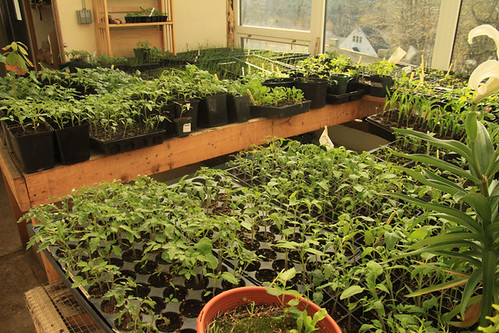
The greenhouse in the science building is full of seedlings-- tomatoes, basil, onions, peppers, broccoli, kale, chard, and all kinds of flowers are sprouting and growing strong!
Here's a picture from the end of April
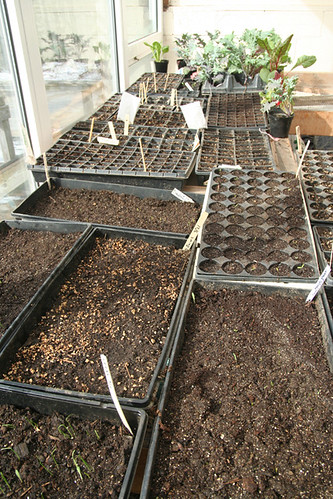
This picture was taken in March, when the planting had just begun:
The Plan:
The farm plan was composed using principles of companion planting and guilds. Companion planting is the idea that placing plants that benefit each other close together builds a more productive and healthy garden. Guilds, a related permaculture concept, are groups of plants that are mutually beneficial. In each tier, I’ll point out how these principles influenced the plan.
Tier One:
Strawberries and onions are friendly. Lettuce does well with beets and carrots– all three grow next to each other. Beets have magnesium in their leaves, which are good for the soil. Peas are also a good companion for carrots. They fix nitrogen in the soil– a good thing to remember for the next rotation. I may replace the peas with leeks, which support the tomatoes and the carrots.
Tier Two:
This tier is mostly composed of a “tomato sauce” guild. Guilds can be formed for biological reasons– because the plants support each other’s growth– or because the guild improves the flavor of the plants. I formed this guild with the latter in mind. Basil is said to improve the flavor of tomatoes. Basil is also a good companion to peppers. Garlic works as a fungicide through accumulating sulfur and may help repel pests. Hot peppers have been said to prevent root rot and other diseases and bell peppers support the flavor of tomatoes. Bee Balm also enhances the flavor and health of tomatoes. If I can locate some bee balm plants I’ll consider planting those near this tier.
Tier Three:
The next tier contains another guild, the traditional three sisters guild. This guild has Native American origins. Corn depletes the nitrogen from the soil while the beans enrich the soil as they fix nitrogen from the air. The squash suppresses the weeds around the corn and traps moisture into the soil. Peas are near the corn since peas also fix nitrogen, replenishing the soil which the corn has depleted. One change will be to swap potatoes and the spinach since spinach does well near beans and peas. Potatoes would move where the leeks are.
Tier Four:
As mentioned before, I may move the leeks up to where the peas are, since leeks are good with carrots and with the tomato sauce guild. Potatoes being moved to where the leeks are would support the cabbage which is friendly with potatoes. This final tier is the most random of the tiers. I don’t know much about companion planting for sweet potatoes, melons nor kale.
Previous Season's Planting
we have started our seeds in the Science Greenhouse. Beginning in late February we started the first seedlings and by now the greenhouse is fostering a fast growing number of little black planting pods -- some with long streaks of leeks, some with flowering babies of kale, others with tiny round leaves that will soon looks like strawberries, and others with quickly maturing tomato trees.
Below is the schedule for our planting including what we have already seeded going all the way through august for our fall babes. Any and all repeated names are for repeated plantings so that we can have continued harvests for the majority of our plants throughout the season.
February 21:
--leeks, onions, kale, peas, asparagus, eggplant
March 1:
-peas, kale, onions, leeks, peppers
(planted)
March 8:
--endives, chard, marjoram, strawberries, eggplant, tomatoes
(planted)
March 24:
--peppers, basil, collards, chard, eggplant, broccoli, tomatoes
(planted)
April 1:
--cabbage, mustard greens, sorrel, tomatoes
April 4:
-- tomatoes, peppers, pumpkins, and sunflowers in the greenhouse in the science building.
April 8:
--cabbage, lettuce, collards, chard, strawberries, melon, cucumbers, broccoli
April 15:
--pak choi, cabbage, mustard greens, cucumber, lettuce, summer squash, melon
April 24:
--lettuce, chard, corn, brussel sprouts--
May 1:
--lettuce, arugula, corn, sprouts--
May 7: FIRST PLANTING IN THE GROUND
--zucchini, squash, pumpkin, carrots, lettuce, rutabega, radish, beets, turnips, PLUS everything from the greenhouse--
May 15:
--zucchini, squash, pumpkin, arugula, carrots, lettuce, radish, beets, turnips, diakon--
May 24:
--carrots, arugula, radish, chard--
June 1:
--beans, carrots, diakon--
June 8:
--beans, cucumbers--
June 15:
--beans, carrots--
June 24:
--beans, peppers, eggplant--
July 1:
--diakon, carrots--
July 8:
--carrots, diakon--
July 15:
--collards--
July 24:
--collards--
August 1:
--leeks, collards--
August 8:
--collards, beets, turnips--
August 24:
--arugula, rutabega, turnips--


![[paper clip]](/courses/source/wiki_images/paper_clip_tilt.png)
 name last modified size
